
What SIC 42110 covers
The classification is narrower than "construction" generally and wider than "surfacing". It covers building roads, streets and other vehicle and pedestrian ways: the earthworks and formation beneath them, the pavement layers, the surface course, and the kerbing, drainage and markings that make them usable.
Formation
Excavation, sub-formation and capping.
Compaction
Layer by layer, to specification.
Surfacing
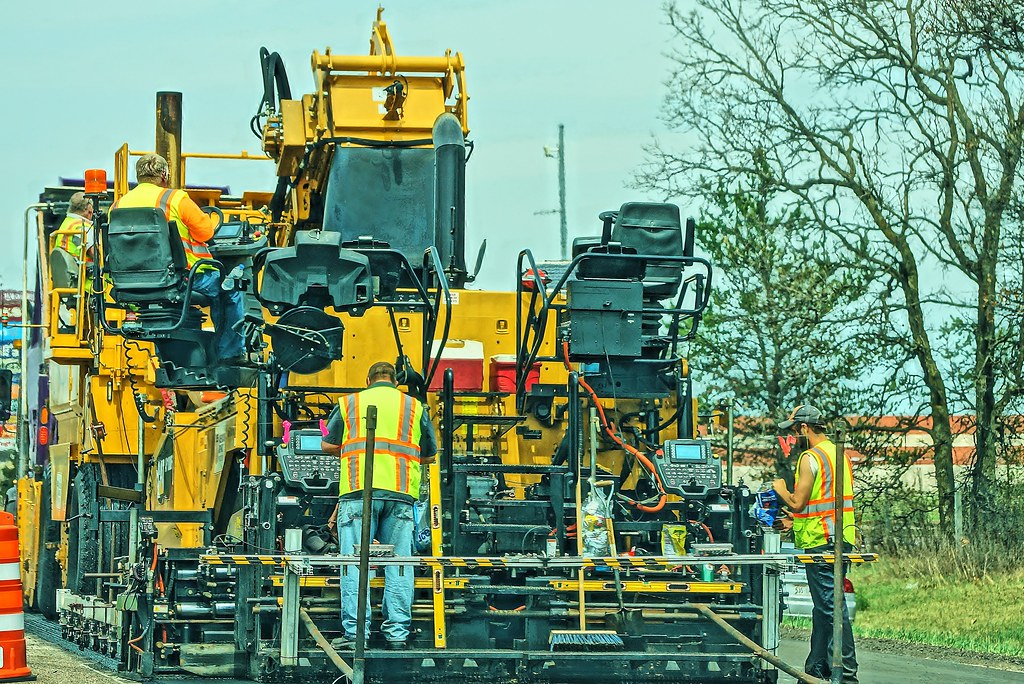
Binder and surface course laid to level.
Finishing
Kerbs, edgings, drainage and markings.
The layers matter more than the surface
A road is a structure, not a covering. Load from a wheel spreads down through the pavement, and each layer distributes it over a wider area of the one beneath. The surface course is what people see and judge; the layers below it are what determine whether the road lasts.
Almost every premature road failure traces to something below the surface. Inadequate compaction, a weak or wet subgrade, or drainage that never worked. Resurfacing over an unresolved problem hides it for a season and no longer.
That is why the sequence is fixed and why compaction is checked as the work proceeds rather than at the end. A layer that is under-compacted cannot be corrected once the next one is on top of it.
Drainage is the other half of the same point. Water in a pavement structure destroys it, by softening the subgrade and, in winter, by freezing and expanding within it.
Working on and near the highway
Highway work happens with traffic and pedestrians alongside it. The traffic management is not an accessory to the job. It is part of the job, it is designed before work starts, and on a public road it is subject to permit and to inspection. Sequencing follows from it, because how a site can be laid out determines the order the work can be done in.
Making an enquiry
For a road or surfacing enquiry, the useful things to send are the location, the area involved, what is there now, and what traffic the finished surface has to carry. If there is a specification or a drawing, send that.
Contact
Telephone [PUBLIC TELEPHONE REQUIRED]
E-mail accounts@techjointcivils.co.uk
Wey Court West
Union Road
Farnham
Surrey
GU9 7PT